Good morning readers !
I grew up admiring Yayoi Kusama: the visionary Japanese artist who passed away at 97. Her work has stayed with me, not just for its beauty, but for the way it invites us to see connection where we might otherwise see separation.
Kusama once wrote: “Polka dots can’t stay alone. When we obliterate nature and our bodies with polka dots we become part of the unity of our environments.”

For her, dots were never just decoration. They were a language of infinity : a way to dissolve the boundaries between self and world, individual and collective. In her Infinity Mirror Rooms, visitors step into spaces where light, reflection, and repetition multiply until it becomes impossible to tell where you end and the artwork begins.
There’s something deeply relevant here for the work we do in tech hiring and diversity. Like Kusama’s dots, people thrive not in isolation, but in ecosystems where they feel seen, connected, and part of something larger. When we design hiring processes that honor this truth (structured, inclusive, and human-centered), we don’t just fill roles. We help build environments where talent, in all its forms, can belong.

✅ The Allyance newsletter provides many useful references on recruitment, diversity and inclusion. Here are some articles about DuckDuckGo hiring culture, MLOps, neurodiversity and AI.

DuckDuckGo Hiring Culture
I recently coached a candidate who was interviewed for a role at DuckDuckGo. I was really impressed by the excellence of their hiring process.
DuckDuckGo’s hiring process stands out from many tech companies by replacing high-pressure, live interview exercises such as live coding, brainteasers, and academic puzzles, with paid, role-specific test projects completed asynchronously. These work samples are designed to mirror the challenges candidates would actually face on the job, evaluated against clearly defined competencies by a designated group of reviewers.
The process is also unusually transparent and candidate-focused: DuckDuckGo shares compensation details early, provides flexibility around deadlines and breaks, gives candidates opportunities to meet future colleagues and leaders, and typically communicates decisions within two to three business days after each stage. In short, the company treats hiring as a two-way assessment of both capability and role fit, rather than simply a one-sided selection process.
P.S: my candidate is joining the company soon! Bravo Alex.
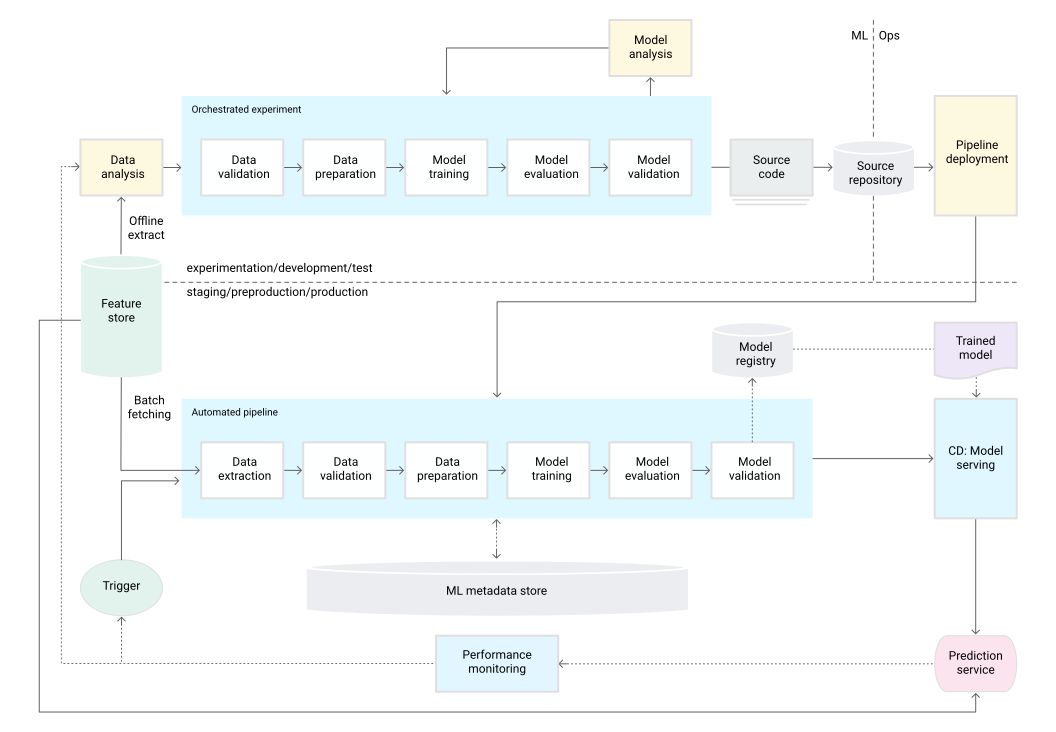
MLOps : automatisation in machine learning
For a Machine Learning Engineer, the hardest part is rarely training a model. The real challenge begins when that model has to operate reliably in production, on changing data, under performance constraints, and at a scale where manual intervention is no longer sustainable.
That is where MLOps comes in. Inspired by DevOps, MLOps brings automation, testing, monitoring, reproducibility, and collaboration to the entire machine-learning lifecycle. It treats an ML product not as a model in isolation, but as a complete system involving data collection, validation, feature engineering, training, deployment, infrastructure, metadata, and monitoring. In fact, the model itself represents only a small part of a production ML system.
The Google Cloud framework describes three levels of maturity:
Level 0 – Manual process
Level 1 – Automated ML pipelines
Level 2 – CI/CD pipeline automation
For engineers, this means combining several disciplines: software development, data engineering, cloud infrastructure, experimentation, observability, and sometimes product thinking. It also means testing more than code. A robust ML pipeline must validate data schemas, detect statistical anomalies, check model quality across relevant segments, verify API compatibility, and measure serving performance such as latency and throughput.
The most important takeaway is simple: deploying an ML model is not the end of the project. It is the beginning of an operational feedback loop : data → training → validation → deployment → monitoring → retraining.
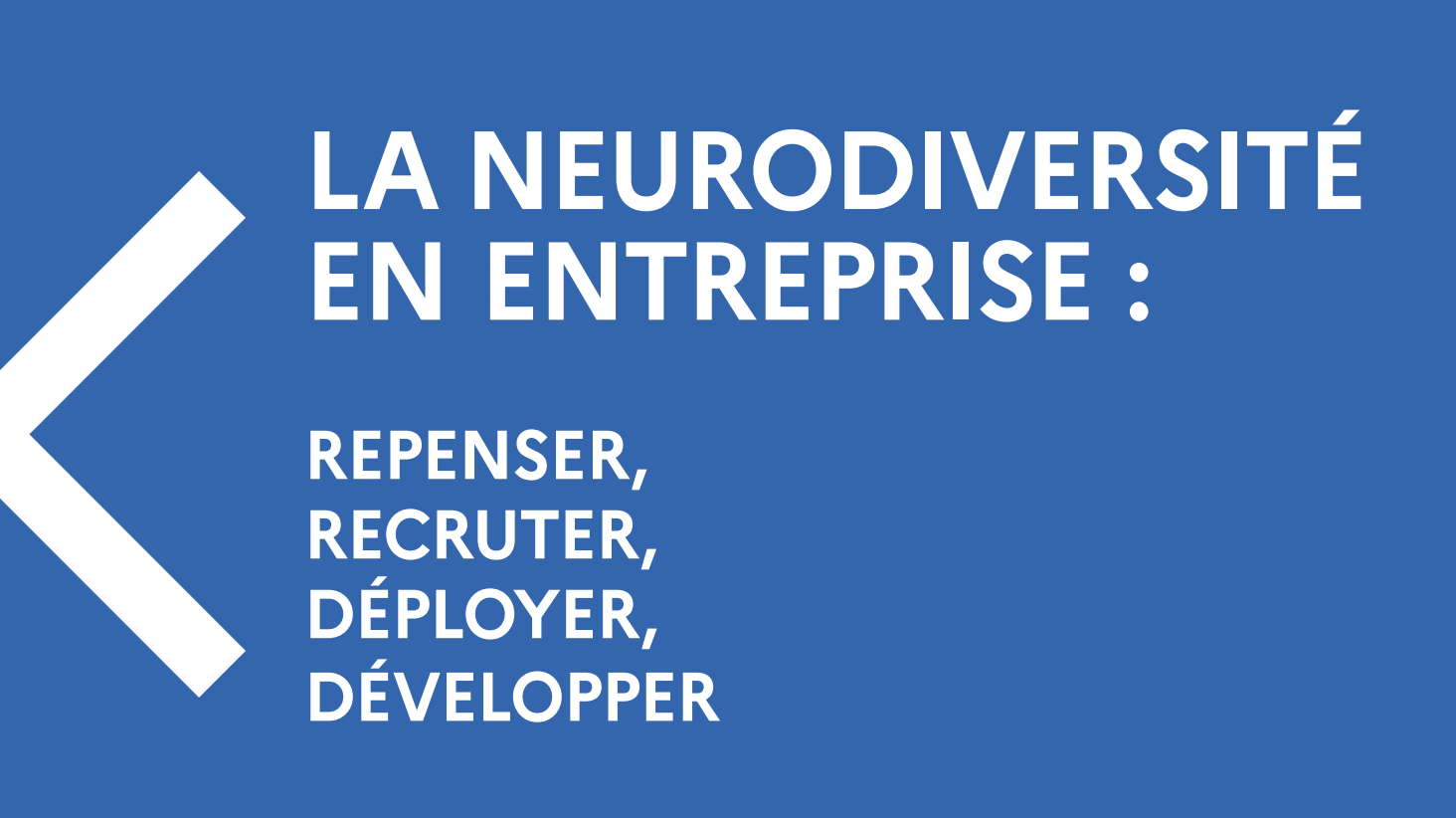
Accompagner la neurodiversité en entreprise
La Délégation interministérielle à la stratégie nationale pour les troubles du neurodéveloppement publie un guide, à l’attention des entreprises, intitulé “La neurodiversité en entreprise : repenser, recruter, déployer, développer”.
Ce guide national de 80 bonnes pratiques s’inscrit dans une volonté de passer d’une logique de sensibilisation à une logique de transformation. Comme d’habitude, je recommande la lecture du glossaire final pour les plus novices sur le sujet. Cela permet une meilleure compréhension des recommandations.
La neurodiversité n’est ni une marginalité ni une exception : elle est une composante structurelle de notre société et de notre force collective.
🔦 The Allyance in the spotlight
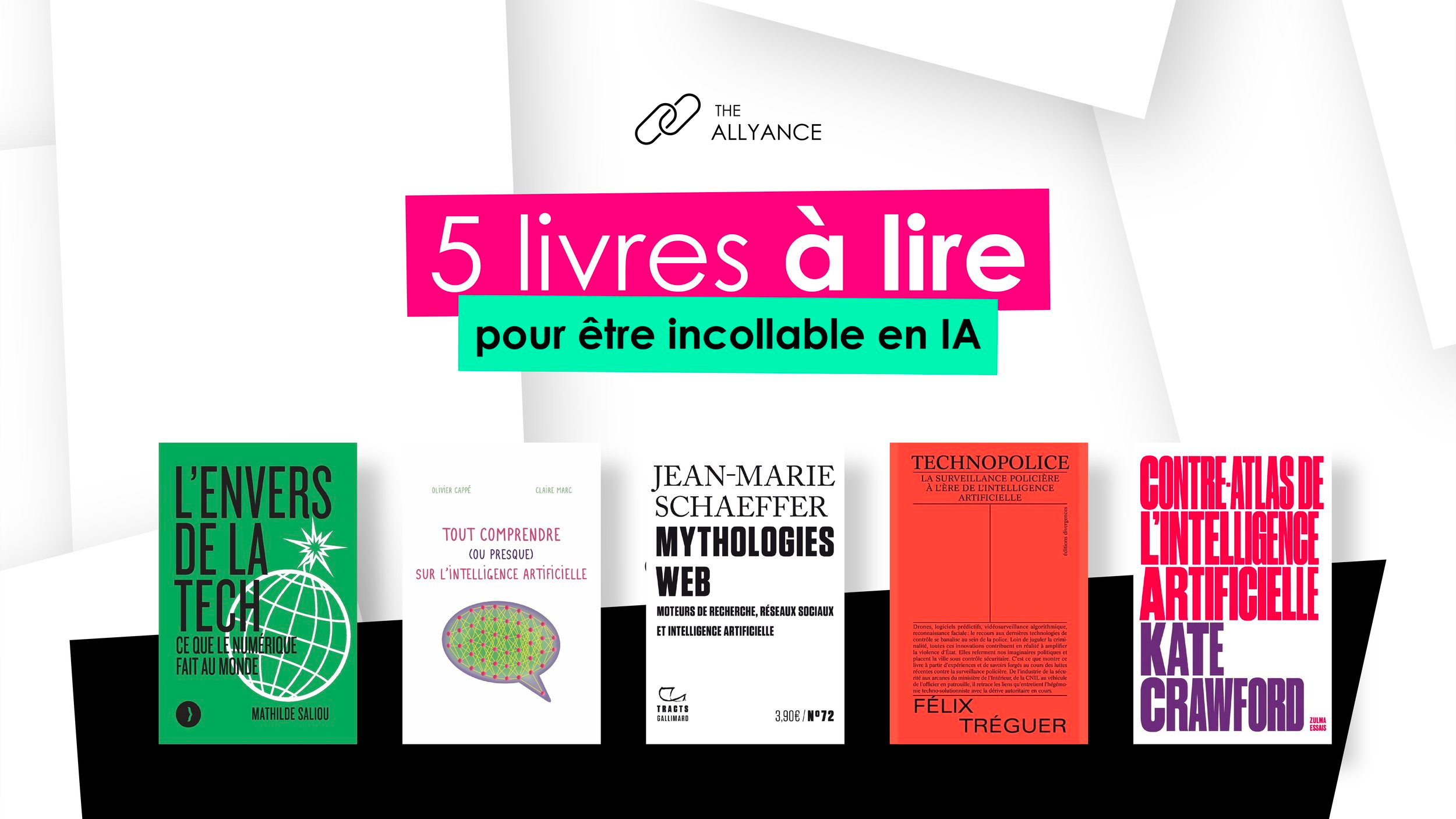
Depuis quelques mois, la quantité de contenus concernant l’Intelligence artificielle est exponentielle. Amateur·ice·s et sceptiques prennent tour à tour la parole, dans un nuage plutôt confus et peu sourcé.
Si chez The Allyance, le sujet nous est plus que familier, cela ne nous empêche pas d’enrichir continuellement nos connaissances théoriques autour de l’Intelligence artificielle et ses enjeux sociétaux. C’est donc tout naturellement que nous avons souhaité réitérer nos recommandations de lecture, avec un focus sur cette thématique brûlante.
Les 5 ouvrages que nous recommandons tissent des liens essentiels entre la technologie et la société contemporaine : travail, climat, féminisme, sociologie et dynamiques de pouvoir… Pour un usage raisonné et en conscience des outils d’IA.
🤫 Backstage secrets
🤩 Congratulations Simon for your Machine Learning Manager position!
🤩 Congratulations Akvile for your Senior Fullstack Engineer position!
🤩 Congratulations to Alexandre, Jeanne, Diana and Pierre who ended their coaching program by securing a role last month. We are proud of you!
🌺 The Allyance is currently coaching 2 Machine Learning Engineering Managers, a CTO, a Data Scientist. Everyone is ready to interview. Drops us a line if you want their CV.
I was invited by the Café Meetup Tech to talk about women in AI and investment.
You can contact us : contact@theallyance.one
🩷Hot jobs we are working on
🏹 CTO (AI) - to manage up to 40 people (150 000 - 180 000€)
🎣 Fullstack Tech Lead (Med Tech) - React Native (65 000 - 70 000€) - Full remote
🤿 AI Infrastructure Engineer (Reasearch Lab) - Terraform, ML (70 000 - 100 000€)
🪁 Tech Lead (GreenTech) - Python, Node.js, Typescript (80 000€)
More details here…
✒️ Last words from Caroline, The Allyance CEO
This month has asked us to hold several kinds of loss at once. Gloria Steinem, who helped turn women’s rights into a mass movement and co-founded Ms. magazine, died at 92, leaving behind a blueprint for challenging sexist assumptions in work, home, and public life.
Dolly Parton, the country-music icon and philanthropist who rose from rural poverty to global stardom, died at 80 after a brief battle with cancer, remembered for her songwriting, generosity, and unapologetic authenticity. And Yayoi Kusama, the Japanese avant-garde artist whose polka dots and infinity rooms reshaped how we see self and space.
Different arenas, similar arc: each woman built a language through protest, song, or pattern and used it to make other people feel less alone.
Steinem turned private grievances into public claims.
Parton turned hardship into hooks that millions could sing back to themselves.
Kusama turned hallucination and repetition into a visual philosophy of connection.
Their work suggests that culture changes not only through policies or products, but through forms that let people recognize themselves in something larger.
For those of us working in tech hiring and diversity, the parallel is direct. Inclusive hiring is not a one-off initiative; it is a pattern we repeat until it becomes infrastructure: structured interviews, transparent salary bands, diverse slates, accessible processes, and feedback loops that actually shift decisions. Like Kusama’s dots, each practice on its own is small; together, they dissolve the boundary between “exception” and “norm” and help underrepresented talent become part of the environment rather than an addition to it.
As we move into the next quarter, the question these legacies leave us with is not only “Who will we hire?” but “What patterns will we repeat?”
If we choose practices that make belonging systematic rather than symbolic, we honor the same impulse that animated Steinem’s organizing, Parton’s storytelling, and Kusama’s art: the conviction that no one should have to stay alone.