

Good morning readers !
Clara Gainon de Forsan de Gabriac, a 30-year-old specialist in machine learning, describes her unique journey from aspiring artist to becoming a Senior Machine Learning Engineer !
Inspired early by a passion for mathematics and algorithmics, Clara chose to blend creativity and computing, experiencing Erasmus in Finland, and earning a PhD in Natural Language Processing from Sorbonne University. After three years working in AI for video games at Powder, she found her current role.
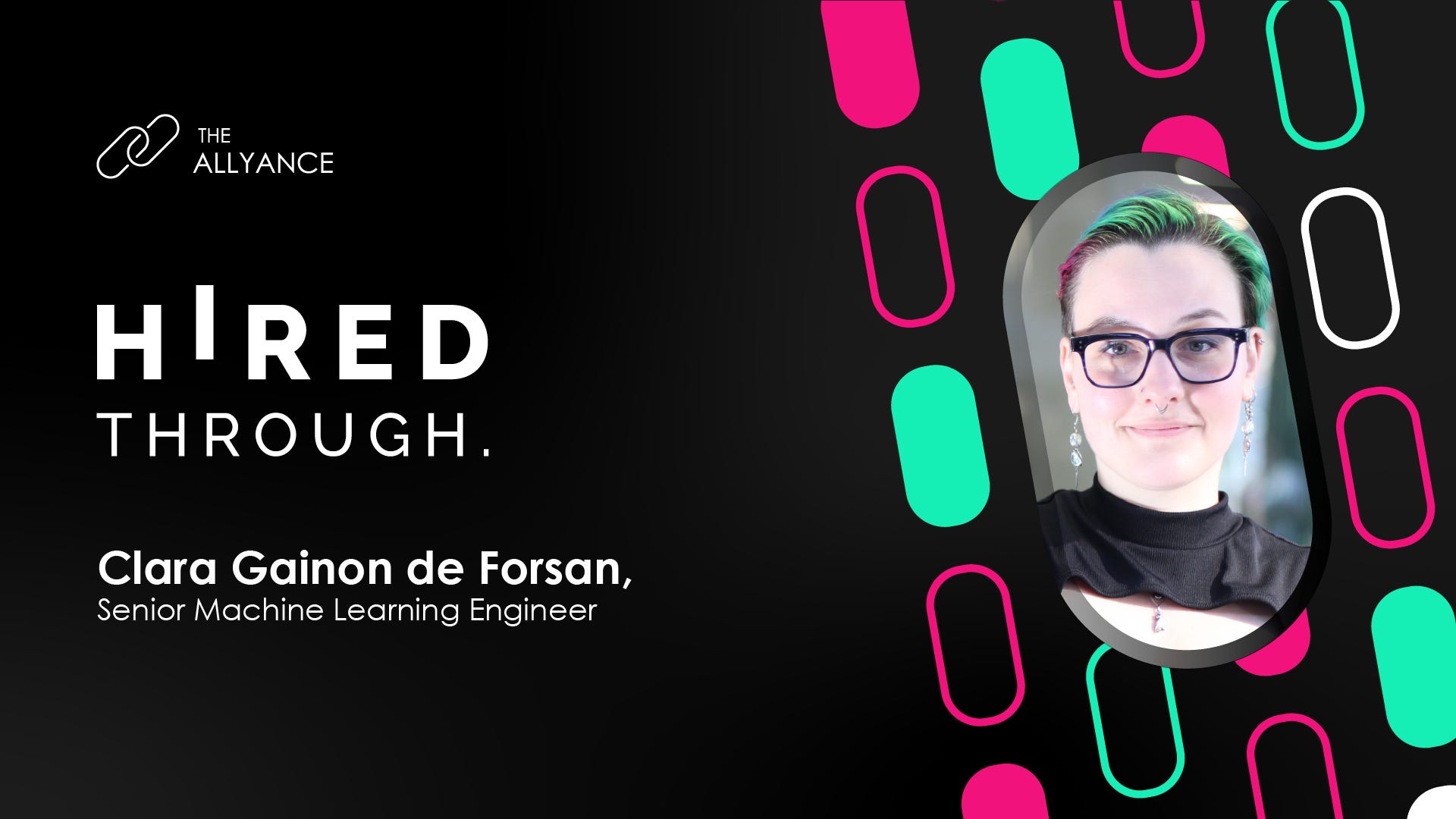
Clara credits The Allyance, and particularly Caroline 💚, for invaluable support and mentorship during her recent job search, helping her regain confidence and recognize her strengths. She emphasizes the importance of combining technical rigor with creativity, and admires women who defy conventional success norms, citing Caroline, her mother, and Pink as inspirations.
Clara encourages other women, especially those in minorities, to seek allies like Caroline to transform perceived weaknesses into valuable assets in their professional journey.
✅ The Allyance newsletter provides many useful references on recruitment, diversity and inclusion. Here are some articles about hiring fresh graduates in computer science, AI and discrimination, candidates and companies (mis)trusting AI, froward-deployed engineers and pay transparency.

🎃 Hiring only senior engineers is the worst policy in the startup industry
This article is from the Tech Rocks' newsletter for tech leaders. While computer science graduates struggle to land jobs, Andrew Churchill, CTO at Weave remind us of the obvious : “there is a huge pool of exceptional junior engineers that most companies won’t even consider.”
There is no rational explanations, yet, here is what we hear (even at The Allyance) :
In small startups: “we are a very small team and we don’t have time to mentor juniors, we need engineers who will be very productive from day 1”
In medium-sized companies: “we are going to grow very fast, we need engineers who can handle scale and have faced such challenges before”
In big companies: “our infrastructure is super complex, it’ll take juniors too long to ramp up”.

🥺 Don’t let AI speed up discrimination
Here is a resource I got thanks to Karen Katlin from Better Allies.
AI might speed up hiring. It shouldn’t also speed up discrimination. New research from Stanford reveals something troubling yet not surprising: generative AI tools can reinforce age and gender bias, especially against older women. Douglas Guilbeault and colleagues analyzed millions of online images and videos. They also prompted ChatGPT to generate more than 34,500 resumes and evaluate them. It consistently:
Portrayed women as younger and less experienced.
Created work histories that disadvantaged older women.
Rated older men’s resumes more favorably.
If your organization uses AI to screen resumes or evaluate candidates, don’t let it make decisions unchecked. Advocate for a short pause step in the hiring process:
“Before we finalize candidates, let’s review the AI-generated materials for biased assumptions about age or gender.”

👻 AI in hiring: The growing trust gap between employers and job candidates
AI has rapidly become a cornerstone of recruitment, streamlining hiring processes and helping organizations fill vacancies with greater efficiency and speed. At the same time, job seekers are increasingly using AI tools to improve their applications. This dual embrace of AI has generated a widening trust gap between employers and candidates.
For job seekers, the lack of transparency, the prevalence of “ghost jobs” posted without real intent to hire, and fears of layoff-driven instability further fuel hesitation and skepticism.
AI is now an essential tool for many candidates, with 39% admitting to using it for application writing and preparation, but this also blurs the line between genuine skills and digital embellishments, making authenticity harder to judge.
Ultimately, companies that blend innovation with fairness, clarity, and respect for candidate dignity will be best positioned to lead in an increasingly complex hiring landscape.
A March 2025 Gartner survey revealed that only 26% of candidates trust AI to evaluate them fairly, even though more than half believe AI is used to screen their application materials.
🤩 The new hot job in AI: forward-deployed engineers
Thanks to someone I am coaching, I discovered a new role : forward-deployed engineers (FDE). The Financial Times wrote an article about it.
The accelerating popularity of forward-deployed engineers points to a new frontier in talent acquisition, where technical know-how meets deep customer engagement to drive successful AI adoption.
The FDE role is inspired by military concepts : engineers are embedded directly within client environments to discover needs and deliver highly customized technological solutions (but it’s not called consulting…).
Key skills include technical expertise in AI and machine learning, strong communication, and the ability to bridge gaps between customer requirements and product capabilities.
The job is a blend of product discovery and customer success, aiming to build “game-changing” solutions and long-lasting client relationships.
Anthropic, OpenAI and Cohere are recruiting for so-called forward-deployed engineers, a new job for generative AI companies, as part of a push to generate more revenues by installing specialists within businesses to help them customise their AI models.

💶 Transparence des salaires : ce qui va changer en 2026
En avez-vous entendu parler ? La directive européenne sur la transparence salariale adoptée le 10 mai 2023 doit être obligatoirement transposée dans le droit français avant le 7 juin 2026. Elle vise principalement à améliorer la transparence en matière de rémunération afin de réduire les inégalités salariales entre les femmes et les hommes. C’est une loi essentielle et certaines habitudes doivent être mises à jour comme:
Les entreprises devront indiquer dans les offres d’emploi et avant le premier entretien la rémunération proposée ou au moins une fourchette.
Il sera également interdit de demander aux candidats la rémunération de leurs derniers postes et obligatoire de veiller au respect du droit à l’égalité des rémunérations.
🔦 The Allyance in the spotlight
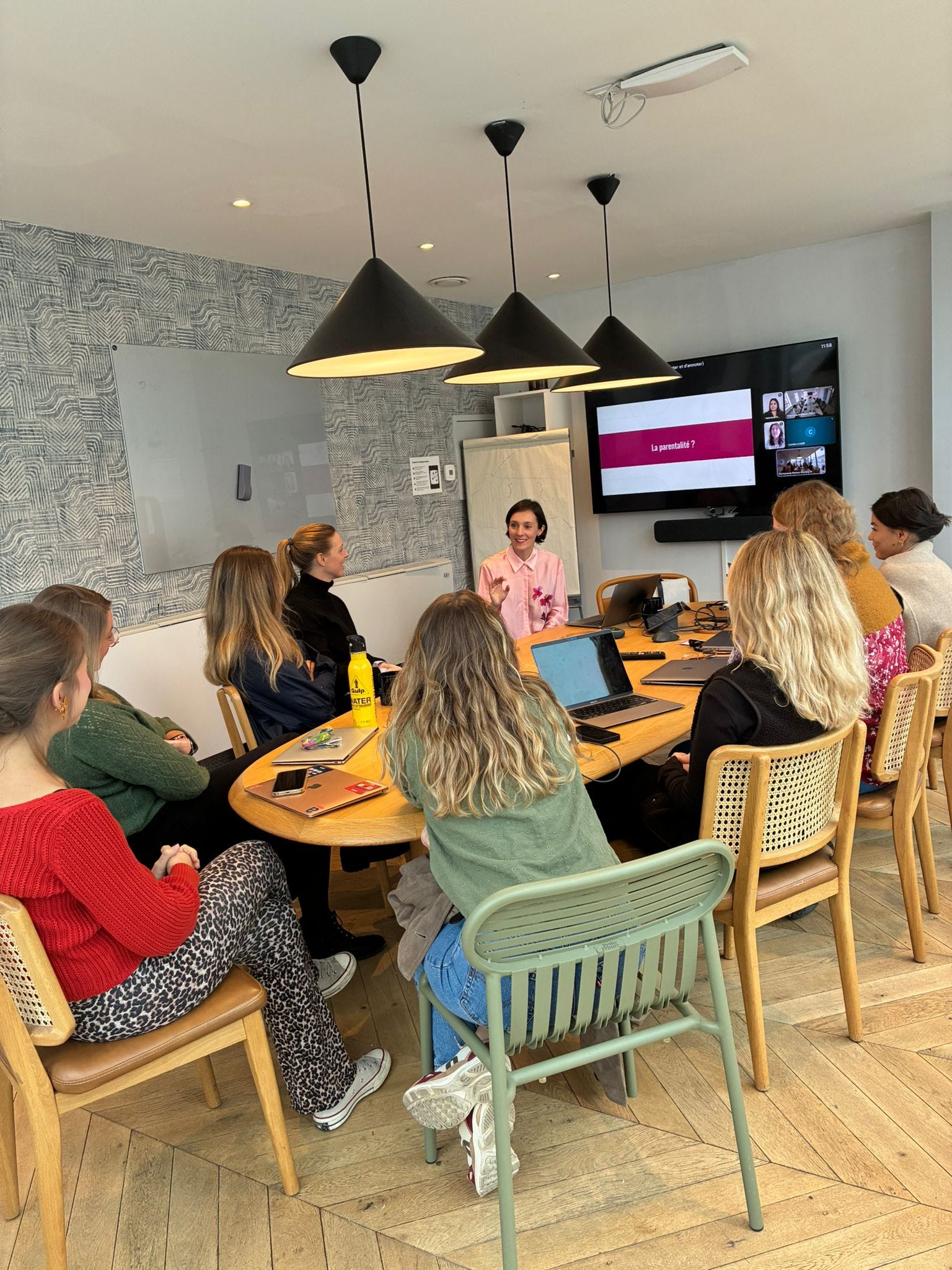
I was invited by Laura Peccia-Galletto and Caroline Cassé to talk to the ERG Women in Leadership at Alma. We talked about building a career path in tech, how to deal (or not) with being a parent, how to address microagressions from clients, peers or other people. It was a very open conversation with a curious group of women !
I rarely accept this kind of talks but when I do, I remember why it is important for minorities to connect and share knowledge.
🤫 Backstage secrets
✨ I was invited by Rocket School to talk about incluvie hiring practices. The students loved the class and asked me to come back !
🛫 3 mentees found a job last month and I signed 4 more coaching programs !
📑 We signed 3 new contracts with new clients = 6 new roles.
🤩 Morgane is actively looking for a SRE Engineer and a Fullstack Engineer.
💃 I am working hard to prepare a beautiful party for The Allyance’s birthday.
You can contact us : contact@theallyance.one
🩷Hot jobs we are working on
🫵 SRE Engineer (Gaming)
🫵 Data Engineer (Gaming)
🫵 Machine Learning Research Engineer (MedTech)
🫵 Fullstack Engineer (MedTech)
🫵 CTO
More details here…

I hope to see you on the 28th of November for The Allyance’s 5th birthday party! Deborah Vance (from Hacks) will not be here but someone as funny as her will !
I totally resonate. Junior talent is vital like Carolines support.